Subterranean termite colonies in Tarrant County thrive in high-moisture clay soils, foraging continuously beneath the ground line until encountering a home's structural framing. In planned communities like Viridian…
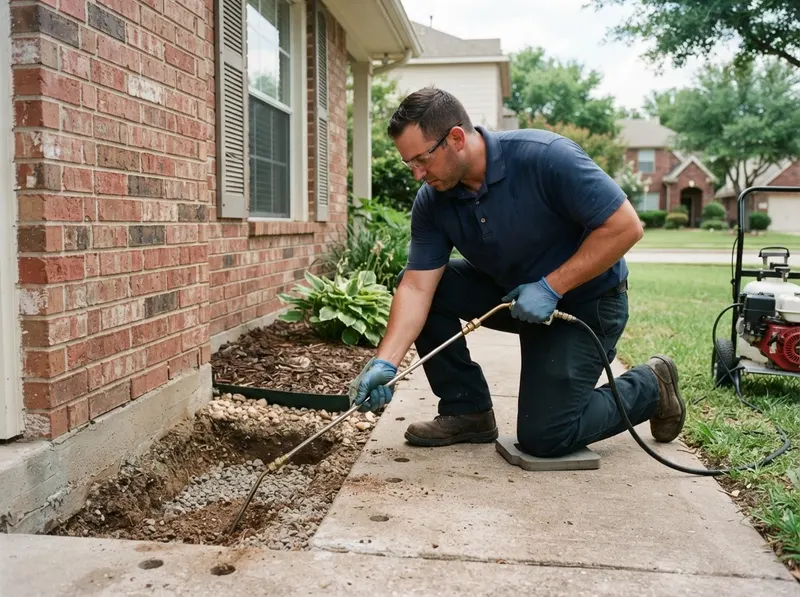
Subterranean termite colonies in Tarrant County thrive in high-moisture clay soils, foraging continuously beneath the ground line until encountering a home's structural framing. In planned communities like Viridian near River Legacy Parks or older slab properties across Fannin Farm and Southeast Arlington, these insects access framing via foundation hairline cracks, plumbing penetrations, and exterior weep holes. Subterranean termite treatment establishes a continuous chemical envelope that foraging worker termites cannot detect, carrying the active agent back into the subterranean nest through social grooming. Liquid non-repellent barriers require continuous soil rodding and trenching 6 inches wide by 6 inches deep around the foundation perimeter, whereas localized slab injections require 0.5-inch holes spaced 12 inches apart along abutting porches, patios, and garage aprons.
Homeowners managing pier-and-beam foundations in Dalworthington Gardens, Pantego, and Heart of Arlington face unique vulnerabilities because open crawl spaces expose floor joists, sills, and support piers directly to soil dampness. Liquid perimeter barriers suit monolithic slab homes with clear dirt access, whereas active crawl-space infestations frequently require targeted wood surface applications alongside continuous interior pier trenching. A liquid termiticide treatment provides immediate, continuous chemical protection against subterranean entry points, though it requires trenching soil and drilling hardscapes. In contrast, subterranean baiting systems avoid drilling paved surfaces entirely by using in-ground monitoring stations installed every 10 to 15 feet around the drip line, though bait consumption relies on natural insect foraging cycles over several months.
Soil composition along Rush Creek and Lake Arlington presents heavy Houston black clay, which shrinks during dry summer stretches and expands during North Texas rainy periods, stressing plumbing conduits and cracking concrete slabs. These shifting ground conditions create direct subterranean conduits that bypass traditional surface-level pest applications. A comprehensive subterranean termite treatment addresses these subterranean pathways directly, safeguarding structural wood members, door frames, and interior subfloors without requiring long-term, auto-renewing service contracts. Standard non-repellent termiticides bind tightly to organic soil particles, preventing leaching into native garden vegetation, while perimeter barriers are placed safely underground away from household pets.
Every job gets a firm, written price after a free on-site visit.
Tell us about your subterranean termite treatment job in Arlington and we'll send a clear, written quote, usually the same day.
 Longhorn Pest Control