Commercial kitchen pest management in Arlington, TX counters specific high-moisture vulnerabilities common to local food-handling facilities. High ambient temperatures across Tarrant County accelerate the life cycle of…
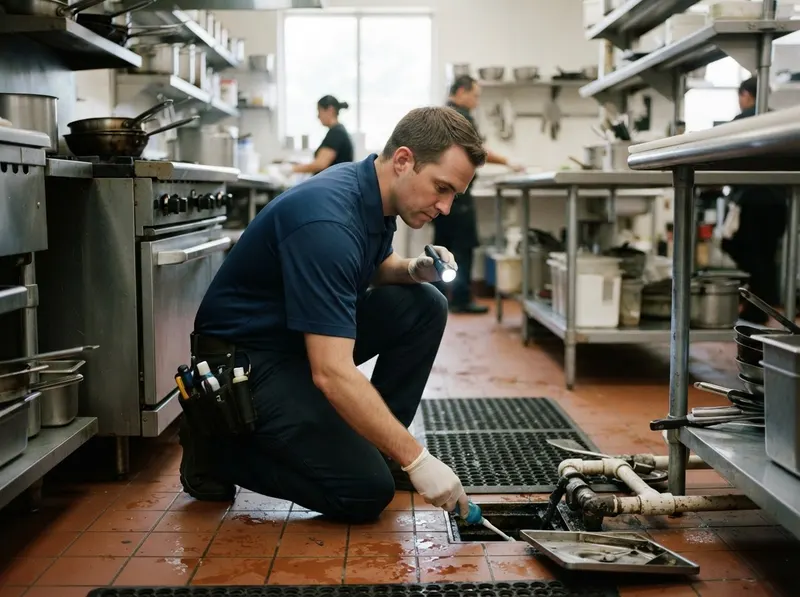
Commercial kitchen pest management in Arlington, TX counters specific high-moisture vulnerabilities common to local food-handling facilities. High ambient temperatures across Tarrant County accelerate the life cycle of Blattella germanica (German roach), turning an unnoticed egg case under a grease trap into hundreds of nymphs within 28 days. In busy culinary spaces near Texas Live! or retail corridors along South Cooper Street, pest pressures stem from continuous food deliveries and high-humidity floor sinks. Routine domestic spraying fails in this environment because wet cleaning regimens wash away generic surface residues, and aggressive liquid sprays can contaminate food-prep tables. Professional protection focuses instead on micro-encapsulated baits placed inside hollow stainless-steel legs, void treatments behind dishwashing stations, and non-repellent formulations applied behind stainless backsplash paneling where pests nest away from daily cleaning chemicals.
Drain systems represent the primary vector for small fly populations in North Texas restaurants. Facilities in Dalworthington Gardens, Pantego, and Heart of Arlington frequently battle drain flies and phorid flies that breed in organic biofilm accumulation inside P-traps and floor trenches. Chemical fogging kills adult flies temporarily, but it leaves larval colonies untouched beneath grease layers. Commercial management deploys biological foam concentrates containing live microbial cultures. These bacteria ingest the gelatinous slime lining the pipes, starving the larvae at the biological source. For facilities situated near Trinity River drainage corridors, such as northern properties bordering Viridian, subterranean Norway rats enter through sewer line cleanouts and service trenches. Mechanical exclusion replaces reliance on toxic baits in open storage rooms, sealing pipe escutcheons and wall sleeves with stainless steel mesh to prevent electrical wire damage.
Service selection depends on floor plan complexity and operating hours. Fast-casual dining rooms require evening bio-foam drain applications and monthly crack-and-crevice monitoring, whereas high-volume institutional kitchens in Southeast Arlington or around the University of Texas at Arlington require bi-weekly service rotations. The structural trade-off centers on treatment intensity versus kitchen downtime. Deep thermal dusting of motor voids and acoustic tile dropped ceilings requires non-operating hours, while targeted gel baiting inside compression gaskets can proceed between shifts. Establishing a documented insect monitoring matrix gives property operators a verifiable audit trail that satisfies Tarrant County Public Health inspections while defending customer seating zones from pest sightings.
Every job gets a firm, written price after a free on-site visit.
Tell us about your commercial kitchen pest management job in Arlington and we'll send a clear, written quote, usually the same day.
 Longhorn Pest Control