Rodent attic exclusion targets the specific construction vulnerabilities found across North Texas homes. In neighborhoods near Lake Arlington and Rush Creek, mature pecan and live oak canopies extend directly over…
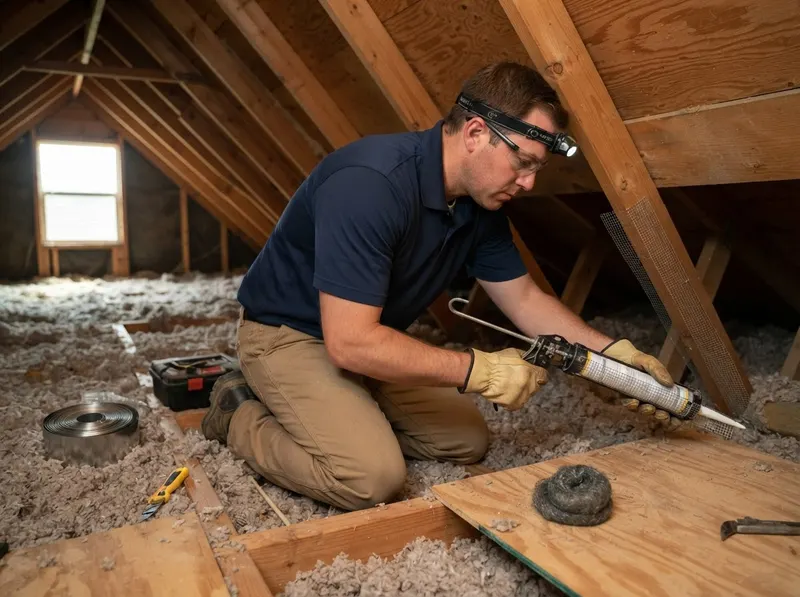
Rodent attic exclusion targets the specific construction vulnerabilities found across North Texas homes. In neighborhoods near Lake Arlington and Rush Creek, mature pecan and live oak canopies extend directly over shingle lines, creating elevated pathways for roof rats. Common construction junctions, such as where barrel tiles meet fascia in Viridian, or standard wood-fascia returns in older pantego and Heart of Arlington residences, often leave gaps exceeding 1/2 inch. Rodents exploit these voids to access blown fiberglass or cellulose insulation, gnawing electrical wiring jackets and leaving droppings. Mechanical exclusion installs 1/4-inch, 19-gauge galvanized steel hardware cloth, elastomeric sealants, and custom-bent metal flashing across roof-fascia intersections, louver vents, and crawl space weep holes in pier-and-beam properties throughout Dalworthington Gardens and Tate Springs.
Selecting permanent physical exclusion differs fundamentally from recurring rodent baiting programs. Chemical baiting stations reduce rodent activity in yard perimeters around Fannin Farm and Southeast Arlington but leave physical entryways open, allowing new generations to reinhabit attic voids every winter. Physical exclusion seals the building envelope permanently, though it requires an upfront investment in structural materials and elevated exterior labor rather than simple recurring poison maintenance. If an active infestation is currently nesting in the attic, lethal mechanical trapping inside the thermal boundary must accompany exterior sealing; otherwise, rodents become trapped within wall voids. 1. An on-site technician inspects roofline intersections, rake boards, ridge vents, and foundation weep holes. 2. Exterior entry gaps larger than 0.25 inches are reinforced with galvanized metal and industrial sealants. 3. Interior mechanical traps extract remaining attic rodents over 5 to 10 days. 4. A follow-up inspection confirms zero interior movement before final access points close.
Every job gets a firm, written price after a free on-site visit.
Tell us about your rodent attic exclusion job in Arlington and we'll send a clear, written quote, usually the same day.
 Longhorn Pest Control